Empowering Communities at the Wildfire Resiliency and Training Summit
POLIS Wildfire team attends and presents at five-day learning event
From April 8th to 12th, the POLIS Wildfire Resilience Project team gathered on Lək̓ʷəŋən territory in Victoria, British Columbia to attend the Wildfire Resiliency and Training Summit “Collective Action: Empowering Communities.”
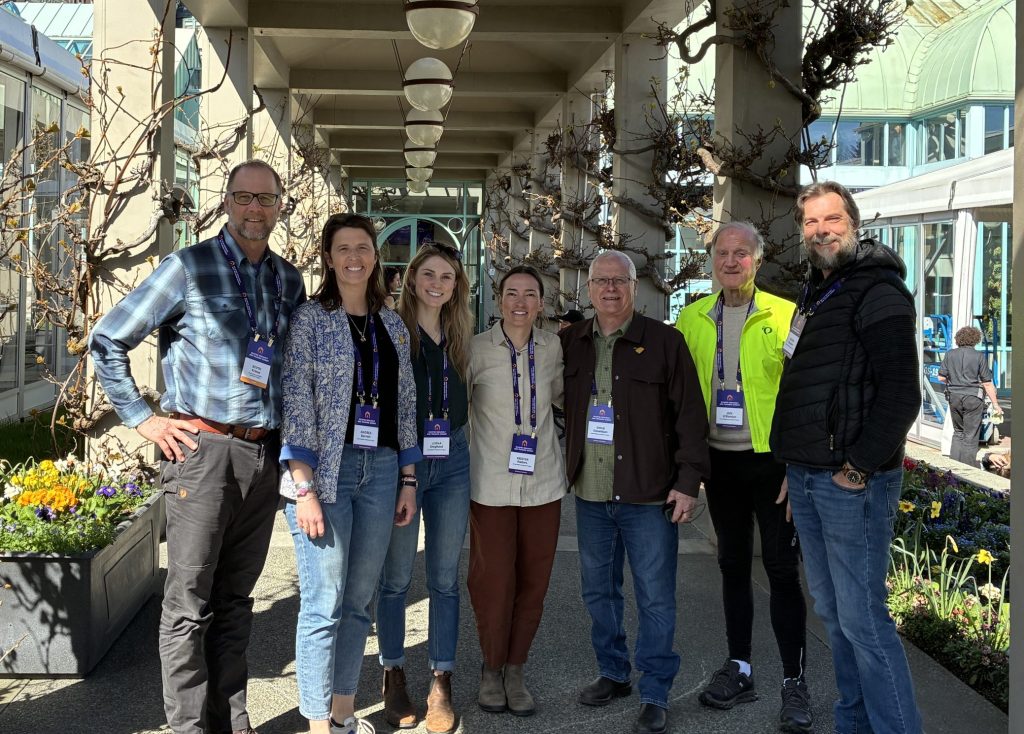
The POLIS Wildfire Resilience Team gathers outside the Wildfire Resiliency and Training Summit, April 2026, Victoria, B.C.
Hosted by FireSmart BC, the summit provided the POLIS team an opportunity to strengthen partnerships, share knowledge, and engage with practitioners and researchers from across Canada and the world. Sessions focused on practical solutions and barriers to wildfire resilience and highlighted on-the-ground realities of both first responders and residents before, during, and after a wildfire.
Kevin Kriese, Senior Wildfire and Land Use Analyst at POLIS, presented on a Potential Operational Delineations (PODs) pilot project being supported by POLIS and led by the Bulkley Morice Wildfire Resilience Project. PODs are spatially delineated strategic planning units that can be used by fire and landscape managers to more effectively prepare for and respond to wildfires. They are developed through collaboration between fire and forest managers. The POD concept provides a crucial decision-support framework that is designed to help bridge silos between wildfire management, forestry, and land use planning.
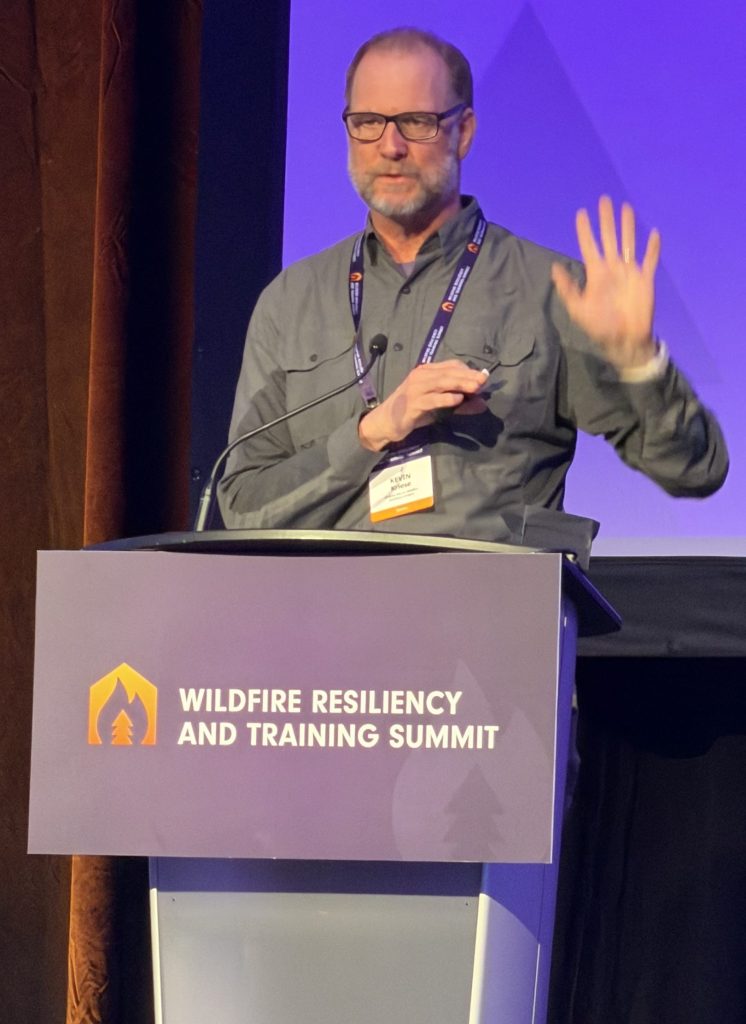
POLIS’ Kevin Kriese presents at the Wildfire Resiliency and Training Summit, April 2026, Victoria, B.C. Credit: Oliver M. Brandes
Several overarching messages that particularly relate to the POLIS Wildfire team’s ongoing work emerged from the summit, including:
- Community wildfire resilience programs are expanding.
The FireSmart BC program has grown significantly since it was first launched and now offers targeted programming for schools, landscapers, and communities, along with a network of coordinators across the province. The expansion of this program reflects a positive shift towards the prioritization of community-level wildfire resilience throughout B.C.
- Wildfire insurance is a complex topic.
Conversations highlighted the nuanced challenges and dynamics that shape insurance availability in wildfire-prone areas. Discussions compared different approaches and results in different jurisdictions, including California (where caps on premiums have contributed to insurers withdrawing from high-risk wildfire-prone areas) and Alberta (where more flexible insurance systems have allowed the provincial government to introduce programs such as “build back better”).
- The impacts of wildfire are also emotional and psychological.
Ashley Beard, PhD candidate and sessional instructor at the University of Victoria, shared insights from interviews conducted with B.C. residents who have been impacted by repeated wildfires. The study explored the long-term emotional and psychological impacts of wildfire events on residents, who described anxiety, trauma, and gaps in post-fire support systems. Concepts such as soliphilia (a deep sense of connection to place and community) and solastalgia (the pain caused by environmental loss) were used to help describe the deep connection to place and the distress caused by environmental change.
- Leadership must be grounded in community connection.
Presenters spoke of the importance of leadership that is grounded in relationships and community connection, reinforcing the idea that resilience depends on relationships and coordination established before emergencies occur.


